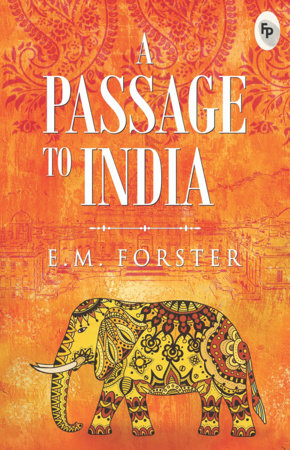
Passage To India, A Paperback by E. M. Forster
Passage To India, A Paperback by E. M. Forster
Product Details
- Publisher: Fingerprint (2020-09-01)
- Language: English
- Paperback: 328 pages
- ISBN-13: 9789390183302
- Item Weight: 198.45 grams
- Dimensions: 19.68 x 12.7 x 1.93 cm
A Passage to India is E.M. Forster’s masterful exploration of colonial tension, cultural misunderstanding, and human connection in British-ruled India. Set in the fictional city of Chandrapore, the novel revolves around the friendship between Dr. Aziz, a young Indian Muslim physician, and Mr. Fielding, a British schoolmaster. Their relationship is tested when Aziz is falsely accused of assault by Adela Quested during a visit to the Marabar Caves—an event that becomes the focal point of emotional, political, and racial conflict.
Blending lyrical prose with deep philosophical inquiry, A Passage to India delves into the complexities of empire, identity, and the elusive possibility of cross-cultural understanding. A landmark of English literature, it remains a powerful and relevant portrait of a society divided by race, religion, and colonial power.
Can friendship survive empire?
- Explore the political and cultural tensions of colonial India through an unforgettable narrative.
- Delve into themes of race, spirituality, and human misunderstanding with Forster’s signature depth.
- Reflect on the fragile dynamics of friendship and trust amidst systemic oppression.
- Discover a literary classic praised for its nuanced storytelling and timeless relevance.
- Colonialism and Empire
- Cultural Clash and Miscommunication
- Friendship and Betrayal
- Race and Identity
- Spirituality and the Unknown
- Justice and Prejudice
- Alienation and Belonging
- Power Dynamics in Colonial Rule
- East vs. West Philosophies
- Nature as Metaphor
About the Author
One of the most influential writers in the British canon, Henry Morgan Forster was born on the New Year’s Day of 1879. Henry, who was accidentally christened Edward Morgan Forster, was raised by his mother and aunts. After finishing his education, Forster decided to devote his time to writing. In 1910-1913, Forster wrote Maurice, a novel about homosexual love that ‘argues for the preservation of a space, physical or psychological, beyond any sort of scrutiny’ (The Guardian). It was published posthumously in 1971, nearly sixty years after being written. Forster wrote many short stories, publishing them in collections such as The Celestial Omnibus, and Other Stories (1911), The Eternal Moment, and Other Stories (1928), The Collected Tales of E. M. Forster (1947), The Life to Come, and Other Stories (1972), and Arctic Summer, and Other Fiction (1980). But his fame rests mainly on his novels, such as Where Angels Fear to Tread (1905), The Longest Journey (1907), A Room with a View (1908) earlier titled Lucy, and A Passage to India (1924) that remains his most celebrated work. Forster had a stroke and breathed his last on June 7, 1970. His ashes were scattered in the rose garden of Coventry’s crematorium, near Warwick University.
Share