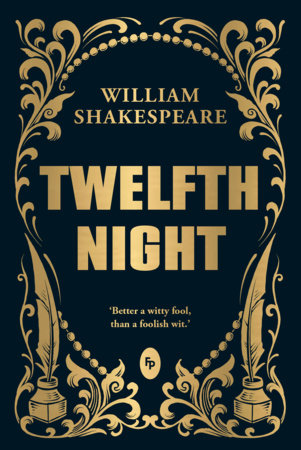
Twelfth Night (Pocket Classics) Paperback by William Shakespeare
Twelfth Night (Pocket Classics) Paperback by William Shakespeare
Product Details
- Publisher: Fingerprint (2019-08-01)
- Language: English
- Paperback: 160 pages
- ISBN-13: 9789389178500
- Item Weight: 68.04 grams
- Dimensions: 15.24 x 10.16 x 1.04 cm
Step into a World of Shipwrecks and Shenanigans
Washed ashore after a storm, Viola assumes a new identity, sparking a cascade of mistaken attractions and hilarious misinterpretations. Crossed wires, crossed hearts, and crossed-dressing; Twelfth Night masterfully unfolds in a world where nothing is quite what it seems.
A Comedy of Errors and Emotions
From the lovesick Duke Orsino to the sharp-witted Feste, every character adds their own flavour to this romantic farce. Whether you're drawn to Malvolio’s delusional dignity or Olivia’s bold pursuit of love, the emotional highs and lows are timeless and endlessly entertaining.
Why This Edition Belongs on Your Shelf
- Explore Shakespeare's clever use of disguise, irony, and dramatic tension.
- Delve into questions of gender, self-discovery, and emotional truth.
- Enjoy poetic dialogue and brilliant repartee in a compact, accessible format.
- A perfect companion for students, performers, and classic literature fans.
- Love: passionate, platonic, mistaken, and unreciprocated.
- Gender identity and performance.
- Social ambition and folly.
- Carnival, festivity, and the inversion of norms.
- Illusion versus reality.
- The bittersweet nature of longing and fulfillment.
About the Author
William Shakespeare began his career as an actor, writer, and part owner of a playing company called the Lord Chamberlain’s Men, later known as King’s Men, in London. Often regarded as the ‘Bard of Avon’ he is one of the world’s pre-eminent dramatists. Most of his known works have been produced between 1589 and 1613. His plays demonstrate the expansiveness of his imagination and the extent of his learning. Shakespeare introduced prose comedy in the histories of the late 1590s—Henry IV, Part I and Part II, and Henry V—after the lyrical Richard II. Julius Caesar introduced a new kind of drama. Shakespeare’s sequence of great comedies continue with Merchant of Venice, Much Ado About Nothing, As You Like It, and Twelfth Night. Until about 1608, he mainly wrote tragedies including Hamlet, Othello, King Lear, and Macbeth. Antony and Cleopatra and Coriolanus—his last major tragedies, contain some of his finest poetry. A true genius, Shakespeare’s popular characters and plots are studied, performed, reinterpreted, and discussed till today.
Share